White Oak and Hickory are the best species for hardwood flooring Utah because their high dimensional stability resists warping in the state's dry mountain climate. Homeowners can expect to pay between $6 and $25 per square foot for materials and professional installation, though selecting these durable woods ensures a better long-term fit for high-elevation environments.
Living in the high desert of Utah presents a unique set of challenges for homeowners who desire the timeless beauty of natural wood. The extreme fluctuations in humidity and altitude often lead to frustrating gaps, warping, or cracking in boards that were not designed for our mountain climate. Protecting your investment requires more than just picking a color you like; it demands a technical understanding of how different species react to Sanpete County’s dry air. In this guide, we will explore the best hardwood species for our local environment, compare the performance of engineered versus solid planks, and discuss the integration of radiant heat systems. You will also find practical insights into durability for active families and a breakdown of current installation costs to help you plan your next home renovation with confidence.
Why Utah's High Desert Climate Challenges Hardwood Floors
Sanpete County sits at a high elevation, creating a high desert environment that is significantly more aggressive toward natural materials than the humid coastal regions found in the East or Pacific Northwest. The primary factor homeowners must consider for hardwood flooring Utah projects is dimensional stability. Wood is a hygroscopic material, meaning it constantly exchanges moisture with the surrounding air to reach equilibrium. In our dry mountain air, moisture levels often plummet in the winter, causing wood planks to lose internal moisture and shrink.
This cycle of contraction leads to unsightly gaps between floorboards during the heating season. Conversely, when we experience rare humid periods or monsoons, the wood absorbs moisture and expands. Unlike the consistent humidity of a sea-level climate, Sanpete’s extreme seasonal temperature swings and low relative humidity put immense stress on the cellular structure of the wood. Understanding this mechanical reality is central to about our local expertise, as we prioritize materials that can withstand these specific fluctuations. Without proper selection and installation techniques, a floor that looks perfect in July may develop significant structural issues by January. This climate also dictates how we integrate energy-efficient heated flooring systems, which require even more careful consideration of how wood reacts to heat and dryness.
Best Hardwood Species for Sanpete County Homes
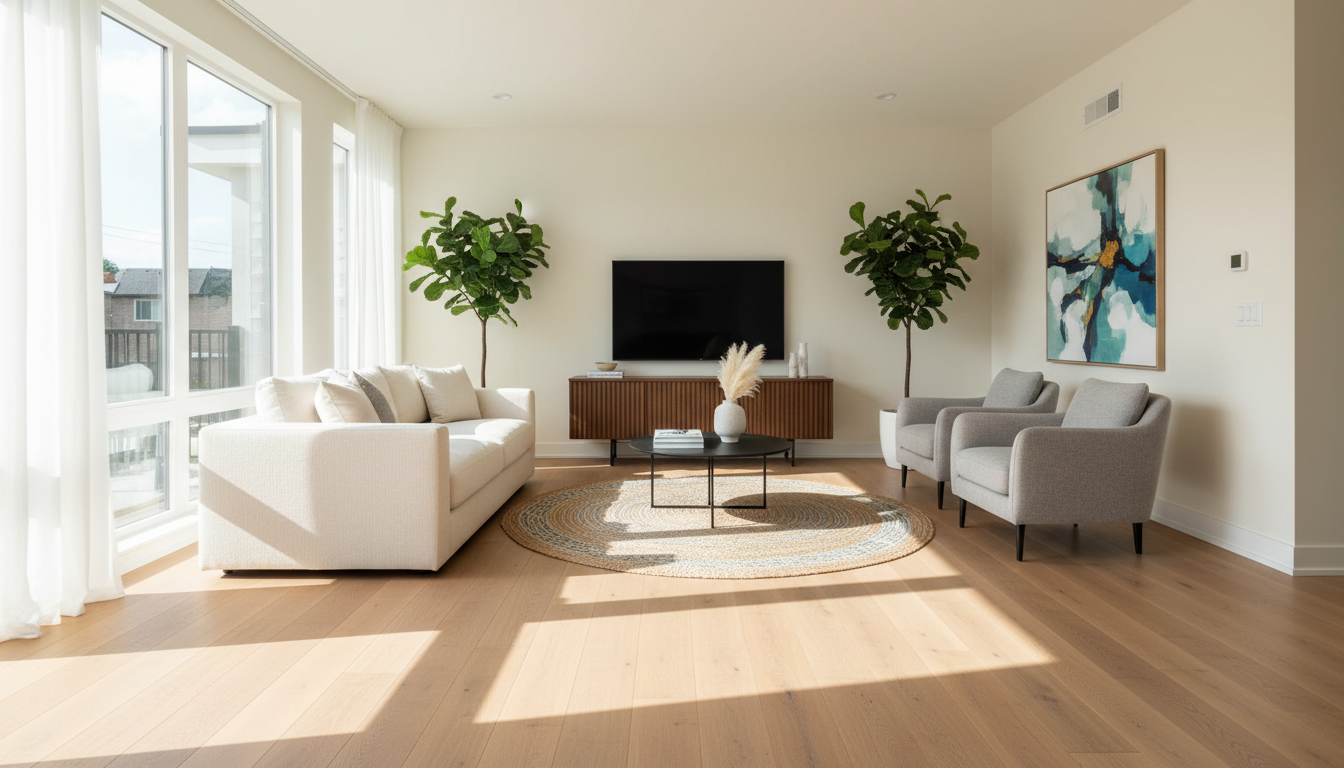
Selecting the right material for hardwood flooring Utah projects requires balancing aesthetic preferences with the physical properties of the wood. In Sanpete County, the primary concern is how a species manages moisture loss during the dry winter months. Some woods are naturally more dimensionally stable, meaning they resist the urge to cup or gap when the relative humidity drops below 20 percent.
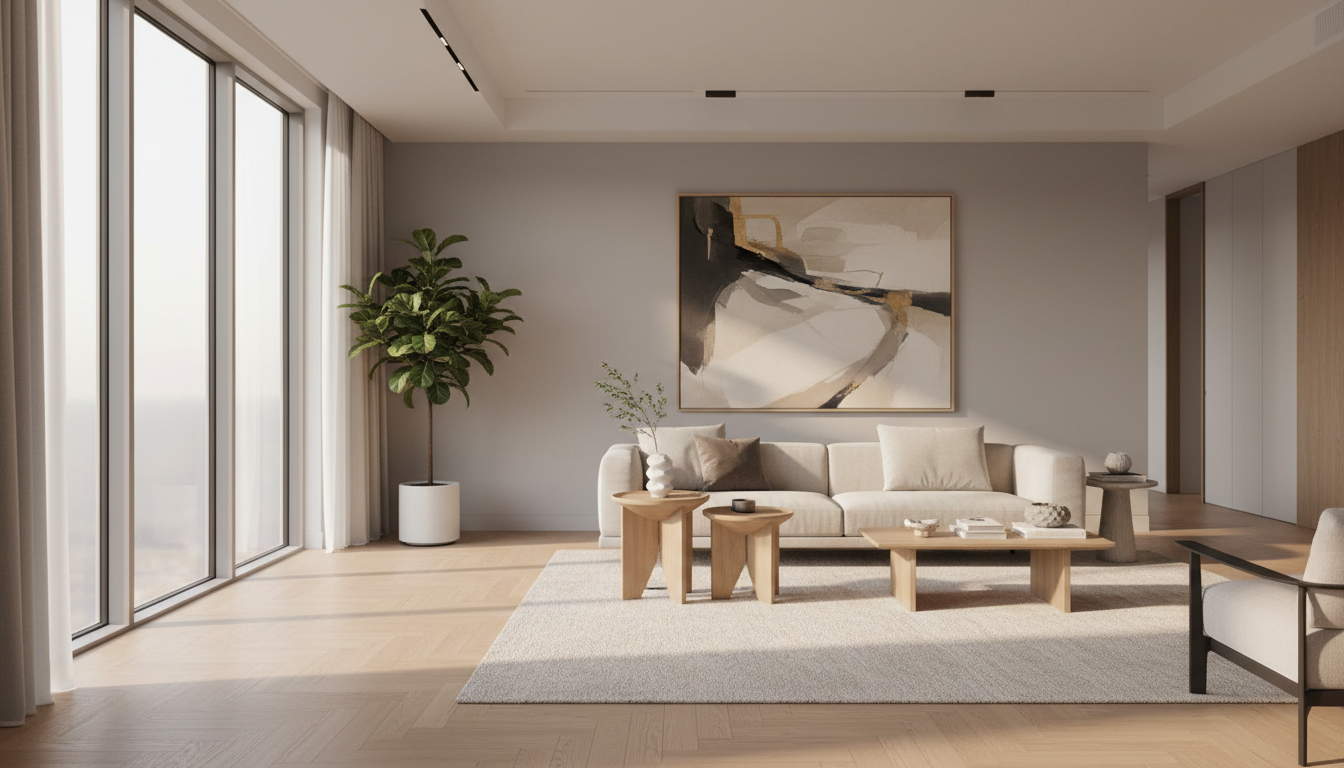
White Oak is widely considered the gold standard for Utah mountain homes. Unlike Red Oak, White Oak has a closed-grain structure and tyloses, which are cellular growths that essentially plug the wood's pores. This makes the wood significantly more resistant to rot and, more importantly, gives it superior stability in fluctuating environments. With a Janka hardness rating of 1,360, it provides a solid defense against the grit and snow tracked in from local trails. Its neutral tan undertones make it a versatile choice for both modern and traditional Sanpete interiors.
Hickory offers unmatched durability for households with large pets or heavy gear. It sits at the top of the hardness scale with a Janka rating of 1,820, making it nearly impossible to dent. However, Hickory is quite reactive to moisture. While it is perfect for achieving a rustic mountain aesthetic, it demands strict humidity control to prevent significant movement. We often recommend Hickory for homeowners who are committed to maintaining a consistent indoor environment or those choosing energy-efficient heated flooring systems that include integrated humidification.
Hard Maple is a favorite for those seeking a clean, minimalist look with fewer knots and a tighter grain. With a Janka rating of 1,450, it is harder than White Oak but has a moderate stability profile. It can be prone to showing small gaps in extreme dry spells, so professional acclimation is vital. You can learn more about our local expertise regarding the specific acclimation times required for these species before they are installed in Ephraim or Fairview homes.
Wood Species | Janka Hardness Rating | Stability in Dry Climates | Best Application |
|---|---|---|---|
White Oak | 1,360 | Superior | High-traffic, radiant heat |
Hickory | 1,820 | Low to Moderate | Rustic aesthetics, extreme durability |
Hard Maple | 1,450 | Moderate | Modern, minimalist interiors |
Engineered vs Solid Hardwood in Dry Climates
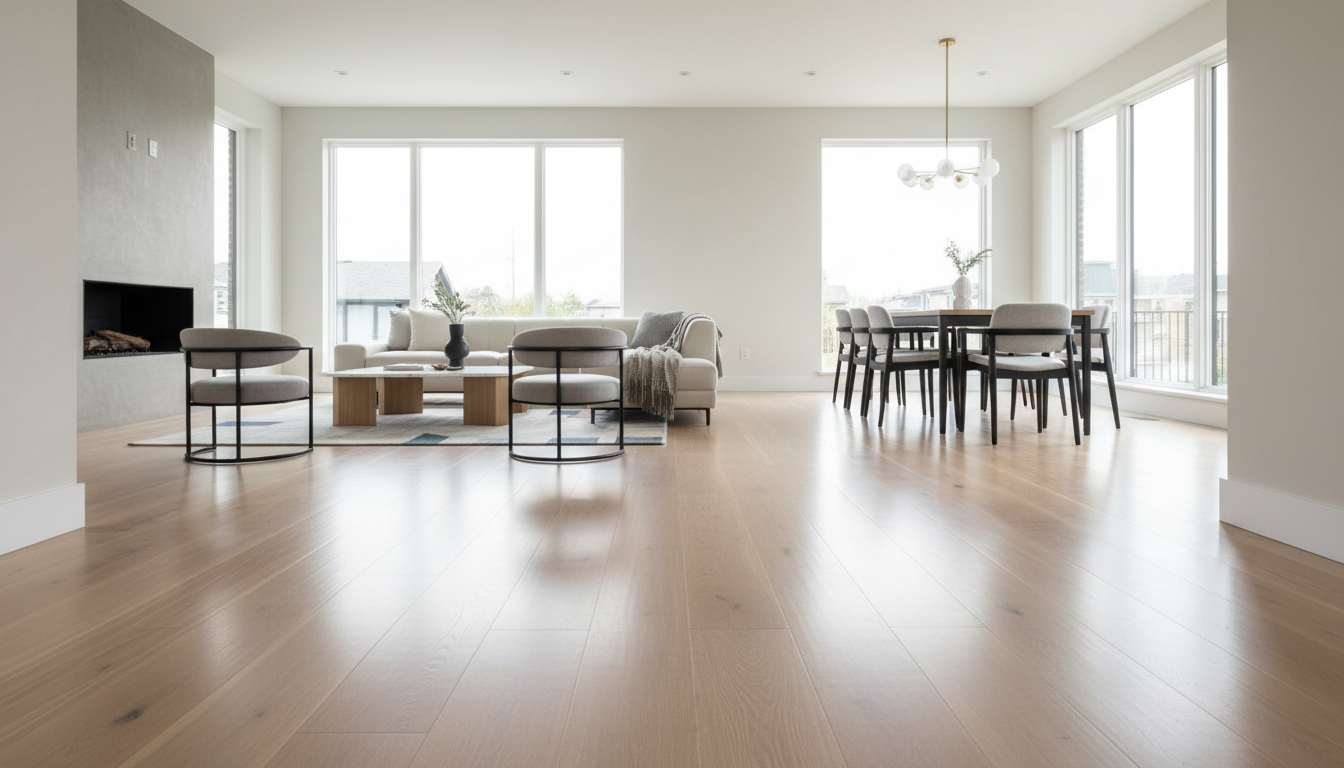
Selecting the right species is only half the battle; the construction of the plank determines how it will survive a Sanpete winter. Solid hardwood consists of a single piece of timber from top to bottom. While it offers a classic feel, its monolithic structure makes it highly susceptible to the dimensional changes caused by our high-elevation air. In contrast, engineered hardwood is specifically designed to neutralize the forces of expansion and contraction. It features a top layer of genuine hardwood bonded to multiple layers of high-quality plywood or high-density fiberboard, arranged in a cross-grain pattern. This cross-ply construction acts as a stabilizer; when the top layer tries to move due to dry air, the underlying layers pull in opposing directions to keep the plank flat and tight.
For many homeowners searching for hardwood flooring Utah, a common PAA (People Also Ask) question is, "What are the downsides of engineered hardwood?" The most significant trade-off is the limited number of times the floor can be sanded and refinished. A solid plank can be refinished multiple times over a century. An engineered plank is limited by the thickness of its wear layer, which is the top slice of real wood. While premium products can be refinished two or three times, budget options may only support a single buff and coat.
Despite this, engineered construction remains the non-negotiable choice for specific Sanpete County applications. If you are building or renovating a home in Ephraim or Manti with energy-efficient heated flooring systems, solid hardwood is rarely recommended. The direct heat from the subfloor combined with the dry climate will almost certainly cause solid wood to cup or crack. Our team at Sanpete Flooring emphasizes engineered products in these scenarios to ensure long-term structural integrity. You can learn more about our local expertise regarding subfloor preparation or contact us for a quote to see which construction suits your home's humidity profile.
Feature | Solid Hardwood | Engineered Hardwood |
|---|---|---|
Composition | 100% Solid Timber | Cross-ply Plywood Core + Hardwood Veneer |
Stability in Dry Air | Low (Prone to Gapping) | High (Resists Movement) |
Radiant Heat Compatibility | Not Recommended | Excellent |
Lifespan Refinishing | 4 to 7 times | 1 to 3 times (depending on wear layer) |
Hardwood Flooring and Radiant Heat Systems
In Sanpete County, where winter temperatures frequently drop below freezing, integrating hardwood flooring Utah projects with energy-efficient heated flooring systems is a standard for luxury and comfort. Success depends on the wood’s ability to conduct heat without compromising its internal structure. Engineered planks are the primary choice because their layered construction allows heat to pass through more efficiently than thick, solid boards. Among species, White Oak excels; its density provides a steady thermal mass that holds warmth while its cellular structure resists the drying effects of a heated subfloor.
Homeowners must avoid "baking" the floor, a common mistake where the subfloor temperature is set too high too quickly. We recommend maintaining a surface temperature that does not exceed 82 degrees Fahrenheit. Rapid temperature spikes can shock the wood, leading to brittle fibers and surface checking. Utilizing advanced sensors and modern thermostats ensures a gradual warm-up, preserving the wood's internal moisture levels.
You can learn more about our local expertise regarding the specific R-values of different wood species to ensure your heating system remains efficient. Selecting a rift-sawn or quartersawn cut for the top wear layer further enhances stability, as these cuts expand and contract vertically rather than horizontally. Contact us for a quote to discuss the specific BTU outputs and installation methods compatible with your preferred species and subfloor configuration.
Durability for Families and Pets
Daily life in a mountain household involves more than just climate control; it requires surfaces that withstand mud, grit, and pets. A frequent question we encounter regarding hardwood flooring Utah installations is, "Will dog nails scratch engineered hardwood?" The answer depends more on the finish and the species than the construction of the plank. While any wood surface can sustain damage under extreme pressure, choosing a high Janka-rated species like Hickory (1,820) or White Oak (1,360) provides the necessary density to resist deep indentations from large breeds.
For homes with heavy foot traffic, the visual camouflage provided by specific textures is just as important as the wood’s hardness. We recommend wire-brushed or hand-scraped textures over smooth finishes. These techniques pull out the softer springwood and leave the harder grain behind, creating a rustic surface that naturally hides minor scratches and pet-related wear.
Feature | Best for Pets & Families | Why it Works |
|---|---|---|
Finish Sheen | Matte or Satin | Hides hair, dust, and micro-scratches |
Texture | Wire-brushed | Distresses the surface to mask new wear |
Species | Hickory | Highest resistance to impacts and dents |
Selecting a matte or low-sheen finish is another practical strategy. Glossy floors act like a mirror for imperfections, highlighting every hair and claw mark under Sanpete’s bright sunlight. A matte finish, conversely, absorbs light and keeps the floor looking clean longer. You can read about our local expertise regarding finish longevity or contact us for a quote to explore samples that balance durability with the aesthetic of energy-efficient heated flooring systems.
Estimated Costs for Hardwood Flooring in Sanpete County
Navigating the financial side of a hardwood flooring Utah project requires looking beyond the sticker price of the planks. For 2026, homeowners in Sanpete County should budget between $6 and $25 per square foot for a complete professional installation. This wide range reflects the difference between commodity-grade products and the high-stability, luxury engineered options necessary for our high-elevation climate.
Project Tier | Material Cost (per sq ft) | Installation & Labor (per sq ft) | Estimated Total (per sq ft) |
|---|---|---|---|
Mid-Grade Engineered | $7.00 – $11.00 | $4.50 – $6.50 | $11.50 – $17.50 |
Luxury / Custom Plank | $12.00 – $18.00 | $6.00 – $9.00 | $18.00 – $27.00 |
For a standard 1,200 square foot main floor in Manti or Ephraim, the total investment typically ranges from $14,000 to $32,000. The primary variable in labor costs involves subfloor preparation. Because our dry air causes significant movement in wood structures, ensuring a perfectly level subfloor is vital to prevent the clicking or gapping common with engineered planks. Subfloor remediation can add $1.00 to $3.00 per square foot depending on the home's age and existing condition.
Additional costs arise when integrating energy-efficient heated flooring systems. These setups require specialized adhesives and precision labor to ensure heat transfers correctly without damaging the wood fibers. You can read about our local expertise regarding the technical logistics of these high-performance installations. While DIY might seem tempting, professional installation ensures the manufacturer’s warranty remains valid, a critical protection given Utah’s aggressive environmental fluctuations. If you are planning a renovation, contact us for a quote to get a site-specific estimate tailored to your home’s subfloor condition and preferred species.
Choosing the right hardwood for the Utah climate is essential for ensuring your floors remain beautiful despite the mountain weather. By balancing species durability with local costs, you can make an informed decision for your Sanpete County home. If you want expert help throughout this process, our professionals are ready to offer guidance. You can read more about us and our dedication to providing quality service to our neighbors. We want to help you find the perfect flooring solution that fits your lifestyle and budget.